
SEND
Special Educational Needs
Tweeddale Primary School is ambitious for all our pupils, and we believe that there is no ceiling on what can be achieved by anyone, regardless of their circumstances or background. We are committed to providing a supportive and inclusive learning environment, giving every young person the opportunity to fulfil their potential now, and in the future.
The leaders at Tweeddale Primary School are leaders for all pupils, enabling our teachers to be teachers of all pupils. Tweeddale Primary School is committed to distributing leadership to secure the best possible provision and outcomes for pupils with special educational needs. We have the same ambition for all our pupils, and recognise the importance and impact of prioritising our responsibilities to pupils with special educational needs.
We work in partnership with pupils and their families in identifying and providing for special educational needs. Where appropriate, we also work in partnership with other agencies. We recognise the importance of communication being inclusive, accessible and culturally sensitive to achieve effective partnership working.
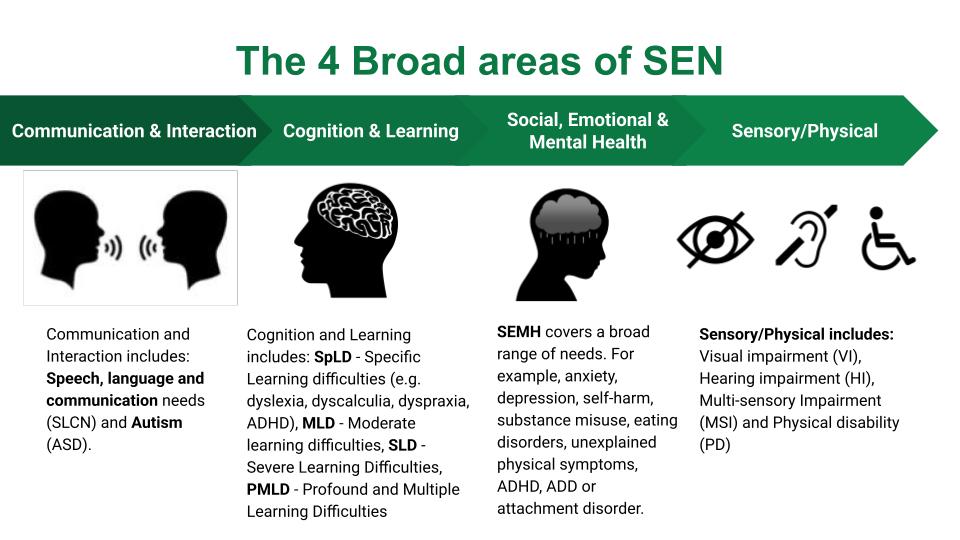
What does it mean to have a Special Educational Need?
A pupil has SEN if they have a learning difficulty or disability that requires special educational provision to be made for them.
They have a learning difficulty or disability if they have:
-
A significantly greater difficulty in learning than most others of the same age; or
-
A disability that prevents or hinders them from making use of facilities of a kind generally provided for others of the same age in mainstream schools.
Special educational provision is educational or training provision that is additional to, or different from, that made generally for other children or young people of the same age by mainstream schools.
What this means at Tweeddale Primary School
Our pupils with SEND have individual Pupil Passports that offer a comprehensive overview of their unique strengths, needs, and day-to-day support strategies.
We offer dedicated provision classrooms tailored to support pupils requiring additional assistance. In these spaces, learning is carefully adapted to individual needs, empowering pupils to achieve their potential and thrive. Guided by our firm belief that every child matters, we foster a nurturing environment where all pupils feel safe, valued, and fully supported.
Our SEND Team
|
Sharon Ashton, |
“Inclusion is at the heart of Tweeddale. Early identification and parent partnership are key. We strive to provide an equitable, accessible and supportive environment where every child feels they belong and thrives. “ |
|
Julie Murray, |
“I believe passionately that every child deserves the very best educational experience and the opportunity to thrive. I value creating a warm, nurturing environment where every child feels safe, listened to, and genuinely valued. I believe every child has unique strengths and potential, and it is our responsibility to recognise, celebrate and support these. These are values I am proud to share with everyone at Tweeddale. “ |
|
Jane Babury, |
“We take time to meet each child where they are. Through our Nurture UK programme, we make sure pupils feel regulated and truly heard, giving them a safe space to process and better manage their everyday challenges.” |
|
Molly Simons, |
“I believe that, with the right support, every child can achieve and thrive. It is our job to break down the barriers children face and ensure they can access learning in a way that is suited to their needs, and I believe that at Tweeddale, we do this really well.” |




Identification and assessment of children with SEND
We work closely with our families to support all our pupils. A home visit is undertaken for all new starters in our nursery and reception classes. This way, we can understand and support the family as a whole and identify any needs that may need supporting. This gives parents and carers the opportunity to be heard and understood. We can discuss early development, any developing needs and support that could be needed.
The transition into school is closely planned, with a staggered start for our early years pupils, giving them the chance to settle without feeling overwhelmed. We can also get to know the individual pupil better with smaller groups each day.
Class teachers make regular assessments of progress for all pupils and identify those whose progress:
-
Is significantly slower than that of their peers starting from the same baseline
-
Fails to match or better the child’s previous rate of progress
-
Fails to close the attainment gap between the child and their peers
-
Widens the attainment gap
-
demonstrates high levels of dysregulation
This may include progress in areas other than attainment, for example, social needs. Attendance and behaviour data might also be used to identify which pupils require additional support.
Slow progress and low attainment will not automatically mean a pupil is recorded as having SEN.
Where a parent/carer has a concern about their child, parents are asked to speak with the class teacher(s)/form tutor so that appropriate observations and assessments can be undertaken.
Pupil Passport
A pupil passport is a regularly reviewed document that contains the needs, strengths and individual strategies for every student with an EHCP or on SEN Support. These are developed in partnership with pupils and their parents/carers. Where appropriate, they might also include strategies recommended by other professionals.
Learning Plan
Some pupils who require more specialised support will have Individualised learning Support Plans to complement pupil passports. For example, an individualised learning support plan will be used to:
-
Track progress against long-term outcomes in Educational, Health and Care Plans (EHCNAs) for pupils working below age-related expectations
-
Inform about medium-term and daily curriculum planning and provision where children are accessing adapted curriculum pathways
-
Inform intervention planning
Universal provision – high quality teaching
Tweeddale Primary School ensures that a universal provision of high quality teaching is able to address gaps in foundational knowledge and skills. Through evidence-informed classroom routines and a well-planned curriculum, teachers are able to address reading fluency and accuracy, communication and language skills, writing composition and number facts. Furthermore, our carefully selected and sequenced curricula ensure foundational subject-specific knowledge is secure at every step. For some students, effective in-classroom targeted support ensures gaps are identified and tackled quickly through our responsive and adaptive classroom practice.
Targeted support
Targeted support addresses identified needs at an early stage through structured interventions and adaptive practice. Key elements of our targeted provision include:
-
English as an Additional Language (EAL): A comprehensive EAL program supporting over 40% of our pupils at Tweeddale.
-
Sensory & Regulation Tools: In-classroom sensory resources such as ear defenders, wobble cushions, and fidget toys to help children maintain focus and self-regulate.
Early Help and Wellbeing Partnerships: Collaboration with Sutton Targeted Early Help and the NHS Sutton Education Wellbeing Service to offer guided self-help, group interventions, and parent coffee mornings.
Specialist support
For pupils requiring higher levels of individualised or specialist intervention, Tweeddale provides targeted internal alternative provisions and multi-agency external expertise:
-
Badger Class: A dedicated, low-stimulation provision classroom catering specifically to pupils with Education, Health and Care Plans (EHCPs), offering adapted curricula in small, supportive groups.
-
Bridge Class: An internal alternative provision led by a Lead Practitioner, designed for pupils with Social, Emotional, and Mental Health (SEMH) needs to foster a calming, structured learning environment.
External Specialist Services: Direct and indirect support from Cognus Therapies (Speech and Language Therapy, Occupational Therapy), Cognus Autism Service champions, and NHS mental health clinicians.
Staff training
We invest continuously in our workforce to ensure all teachers and support staff are equipped with up-to-date, evidence-informed practices:
-
Mandatory trust modules: Annual compliance and safety training via the Greenshaw Learning Trust Staff Skills Academy+ (including Safeguarding, Prevent, and Allergy & Anaphylaxis Training).
-
SEN and inclusion training: Regular INSET days, cluster training events, and specialised autism/SEMH workshops led by Cognus and Trust specialists.
Ongoing professional learning: Access to the Whole School SEND Online CPD Units, internal behaviour video libraries, and GLT Research School webinars.
Useful links
Teacher Handbook: SEND
With contributions from specialists across the sector, the handbook is a comprehensive resource for teachers and parents to use over time. It brings together practical examples of high-quality teaching – placing focus on removing barriers to learning, getting to know and understand individual learners, and bringing to life the graduated approach. To access this free resource, click on the link below and sign up to Whole School SEND:
Whole School SEND Online CPD Units
Free, flexible online learning to help develop inclusive practice.